
Boilers & heating
Why is my radiator cold when the heating is on?
The heating is on, most rooms are warming up, but one radiator is doing very little. Before assuming it needs replacing—or that the whole system needs flushing—it helps to establish what is actually happening.
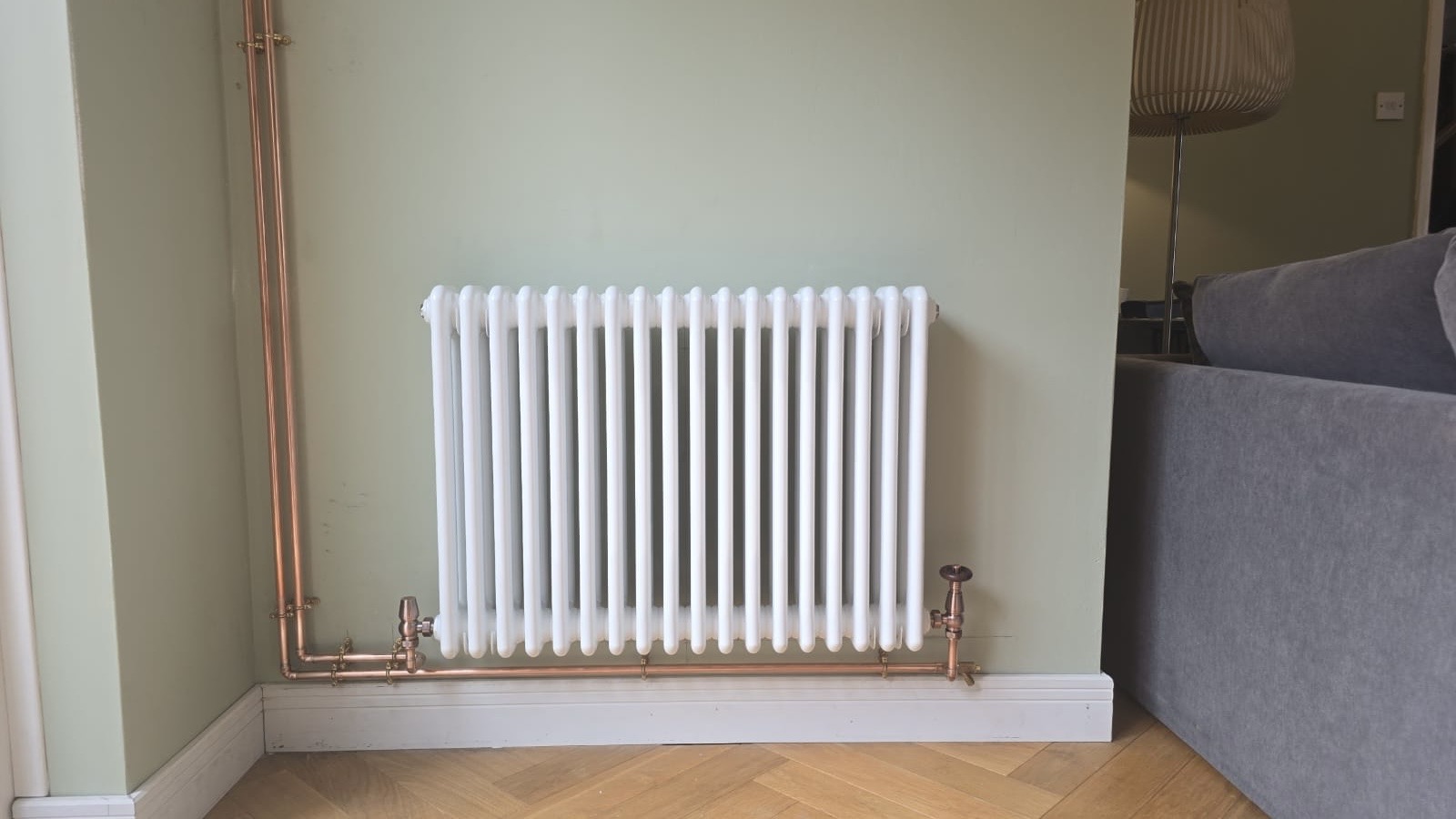
Check that heat is being requested
Check the programmer, room thermostat and any smart heating schedule. A boiler may stop heating once the room thermostat reaches its set temperature. A thermostatic radiator valve can also reduce flow once its room is warm: a cooler radiator isn’t always a fault.
If you adjust a control, allow time for the system to respond. Note whether all radiators are affected or just one.
Cold at the top
Trapped air is one possible reason for a cold area at the top. Bleeding may help where it is appropriate, but use your system’s instructions, switch the heating off and let it cool first. Hot water can escape from a vent.
Bleeding a sealed system can lower its pressure. Check the manufacturer’s instructions afterwards, and get advice if you are unsure. If air repeatedly returns, there may be an underlying problem to investigate.
Cold at the bottom
A radiator being cooler at the bottom than the top is not automatically a sludge diagnosis. Water gives up heat as it passes through, so some temperature difference is normal.
A persistent cold patch or poor overall output may involve restricted flow or deposits. We assess the symptoms and system condition before recommending cleaning. A powerflush should have a reason behind it.
One radiator is completely cold
Valve problems, air or poor circulation can prevent a radiator warming. Check the normal user setting on the thermostatic valve, but don’t dismantle the valve body or undo pipe connections.
If nearby radiators get hot quickly while this one stays cold, balancing or a flow restriction may be involved. Randomly changing every lockshield makes it harder to establish the original settings.
Several radiators are cold
When a whole zone or floor is affected, the cause may involve controls, a zone valve, circulation or system pressure. Repeatedly bleeding every radiator won’t fix an electrical control or pump fault.
Help us find the cause
Tell us which radiators are affected, where each feels cold and whether the issue began after recent work. Mention whether hot water still works and any boiler fault code. SMC investigates the cause before recommending new radiators, flushing or replacement parts.