Plumbing
How to avoid an emergency plumber call-out
Plumbing problems rarely pick a convenient time. You can’t prevent every leak or blockage, but a few sensible habits can reduce the chances of a small problem becoming an urgent call-out.
Keep food and grease out of the sink
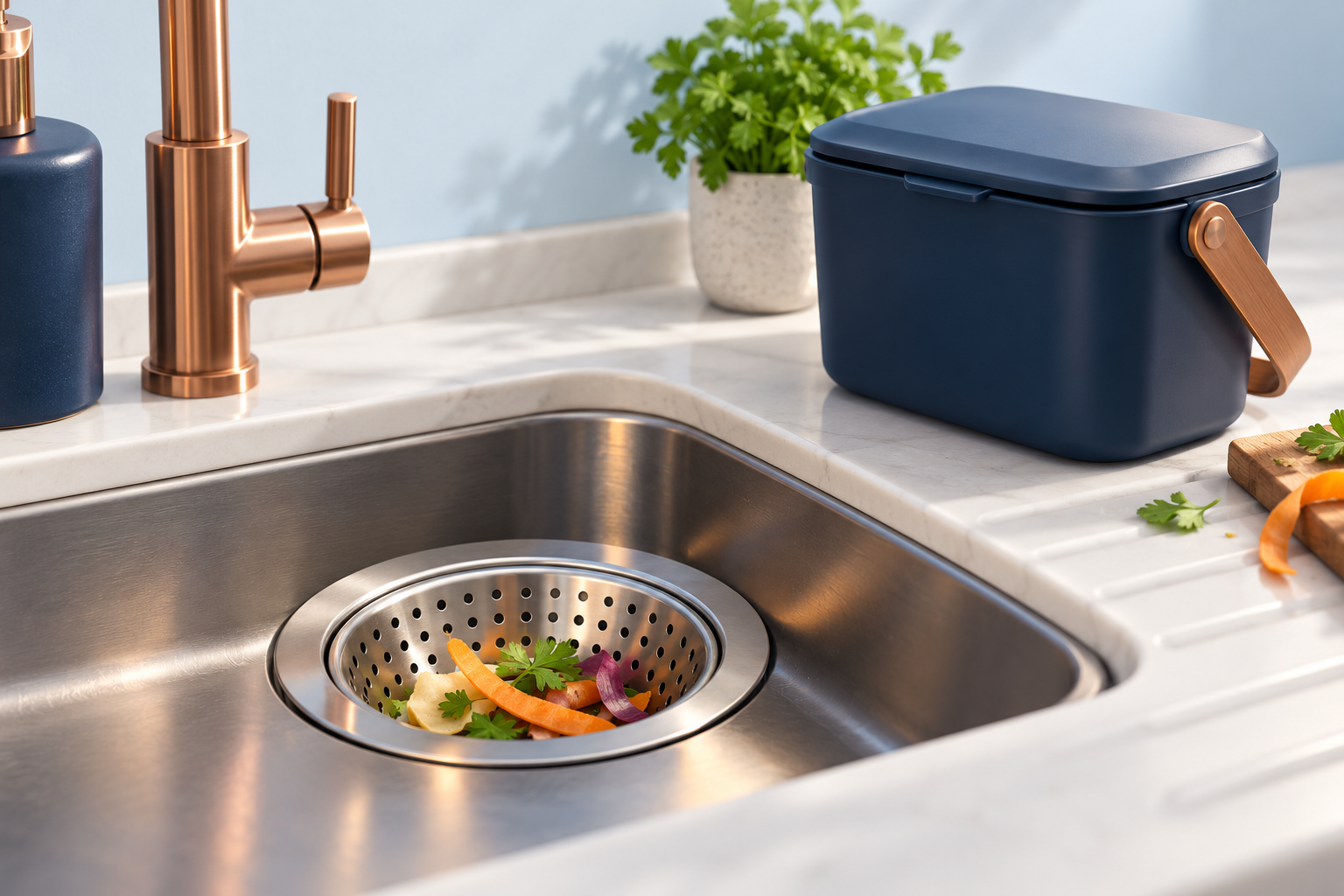
Scrape food scraps into your food-waste caddy before washing up, and use a sink strainer to catch anything left behind.
Let cooking fat cool and wipe greasy pans before washing them. Collect unwanted cooking oil in a suitable container for disposal according to your council’s guidance. Don’t pour it down the sink and hope hot water or washing-up liquid will keep it moving. Cold water won’t solve it either.
Only flush the three Ps
Pee, poo and toilet paper. That’s the list. Keep wipes, kitchen roll, sanitary products, cotton buds and nappies out of the toilet—even wipes labelled “flushable”. A bathroom bin is considerably cheaper than a blocked drain.
If the toilet water rises unusually high after flushing, don’t keep flushing to see whether it clears. You could end up with an overflow.
Clear hair before it becomes a blockage
Regularly remove hair and soap build-up from accessible shower and bath strainers. Follow the fitting manufacturer’s cleaning instructions and avoid forcing covers or pushing objects down the waste.
A shower shouldn’t need a break between users to let the pipes catch up. If water regularly pools around your feet, get the slow drainage investigated.
Act on small leaks
A damp cupboard, staining beneath a radiator valve or a toilet that keeps running deserves attention. Check accessible plumbing occasionally, particularly underneath sinks and around washing-machine connections. Catching a slow leak early can prevent damage to cupboards, floors and ceilings.
Know where your stop tap is
Make sure your household knows where the internal stop tap is, and keep it accessible. Finding it behind a cupboard full of cleaning products is much less entertaining when water is pouring through the ceiling. If it’s seized or leaking, arrange a repair rather than forcing it.
Don’t ignore recurring problems
A drain that repeatedly blocks needs its cause investigated. Clearing it temporarily doesn’t necessarily fix the underlying problem. The same applies to a boiler that repeatedly loses pressure. Continually topping it up can hide a fault that needs attention.
When to stop and call
If a sink or toilet is backing up, stop using it. Don’t keep adding water or mix chemical drain cleaners. For an uncontrolled water leak, turn off the water supply if you can safely reach the stop tap. Keep away from water near electrical equipment.
If several drains are affected or sewage is backing up outside, contact your water company to establish whether the problem involves their sewer or private drainage.
Need a problem checked?
You don’t have to wait until it becomes an emergency. Contact SMC with your postcode, a short description and a photo if helpful. We’ll explain the next step and arrange a visit where appropriate.